

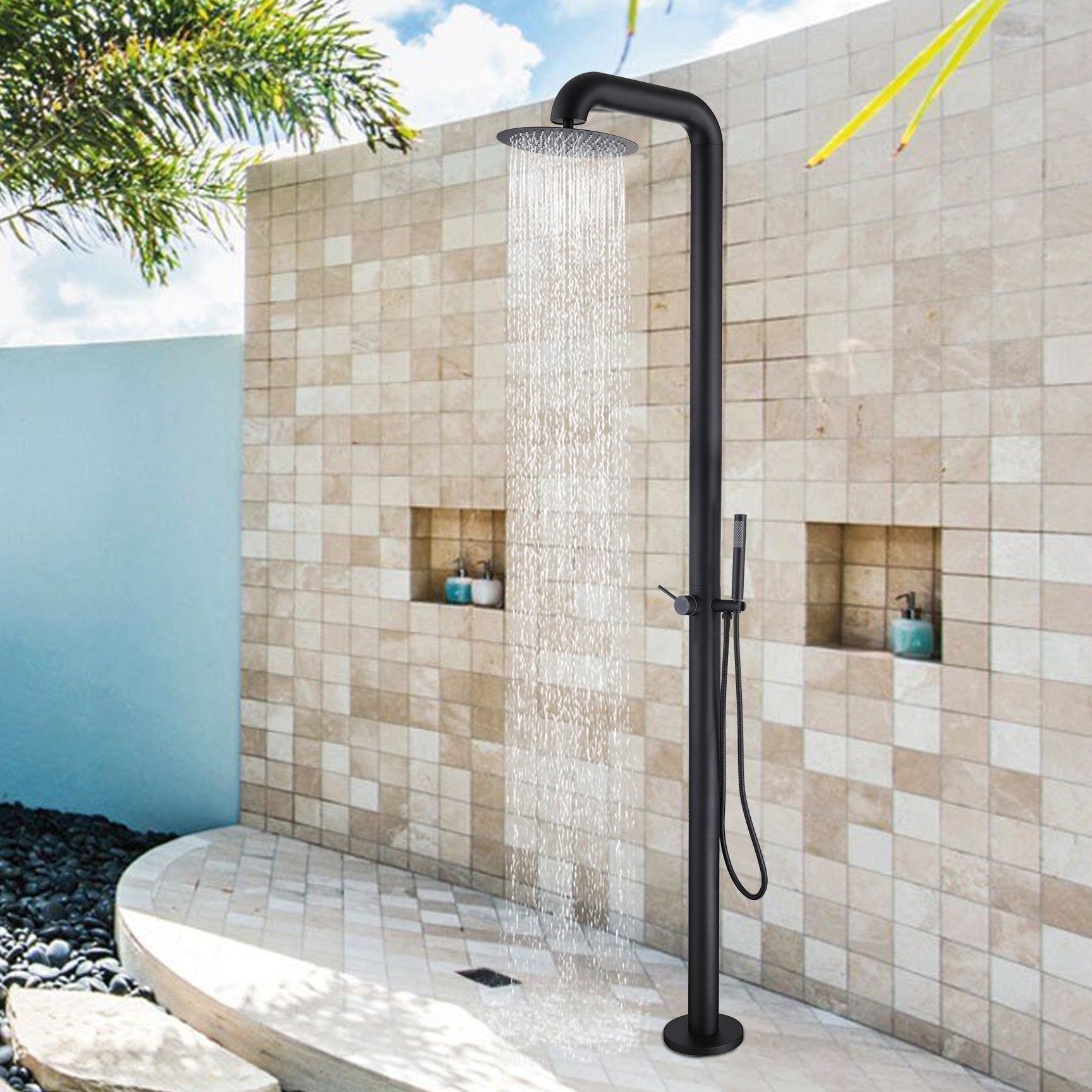
Imagine coming back from a day at the beach, ready to rinse off the sand and salt with a refreshing outdoor shower. You might not realize that the shower you’re relying on is made of a type of stainless steel that’s totally unfit for coastal conditions.
The truth is: outdoor showers rely on stainless steel, but each grade is designed for a specific environment. Picking the wrong one means premature rust and regret.

1. Why Does "Stainless" Steel Rust at the Beach?
Stainless steel resists corrosion thanks to an invisible chromium oxide layer that shields the metal from air and moisture. But coastal environments are different. Chloride ions from salt spray, seawater, and ocean air slowly attack this protective film. Once compromised, rust begins.
Standard 304 stainless steel offers only moderate resistance to chlorides. Continuous exposure to saline solutions or salty air makes it vulnerable to corrosion. Without molybdenum, the metal struggles against salt-induced deterioration
316 stainless steel contains 2-3% molybdenum, which reinforces that protective layer like an extra suit of armor. This addition significantly enhances corrosion resistance in marine environments, making it far more durable for coastal applications

2. How to Choose for Your Specific Environment
✅ Inland Pools, Residential Courtyards, General Outdoor Use
→ Choose 304. It's sufficient and cost-effective.
These locations have drier air and minimal chloride exposure. 304 performs reliably for decades without the premium price tag. Upgrading to 316 here is unnecessary spending.
🆘 Coastal Outdoor Settings—Beaches, Vacation Rentals, Seaside Properties
→ You must use 316. No exceptions.
Salt spray and seawater create a 24/7 corrosive environment. 304 develops rust spots quickly, potentially perforating within one to two years. While 316 costs more upfront, its superior corrosion resistance delivers long-term value—fewer repairs, fewer replacements, less hassle.

3. Why Is 316 More Expensive?
Material Cost: Molybdenum is a rare and expensive alloying element, raising the base material price above 304.
Processing Difficulty: 316 is harder and more challenging to cut, weld, and machine. This demands specialized equipment and skilled labor, increasing manufacturing costs.
Expect to pay 1.5–2× the price for 316-grade products compared to 304 equivalents. At the coast, this premium is an investment, not an expense.

4. Avoid These Pitfalls
Always verify the material grade on product labels. Look for explicit "304 Stainless Steel" or "316 Stainless Steel" markings.
Vague claims like "stainless steel" without a grade often indicate 201 or 202—lower-quality alloys prone to rapid corrosion even inland, and completely unsuitable for marine environments.
Don't accept "it's stainless steel" from sellers. Demand the specific grade in writing.


Leave a comment
This site is protected by hCaptcha and the hCaptcha Privacy Policy and Terms of Service apply.